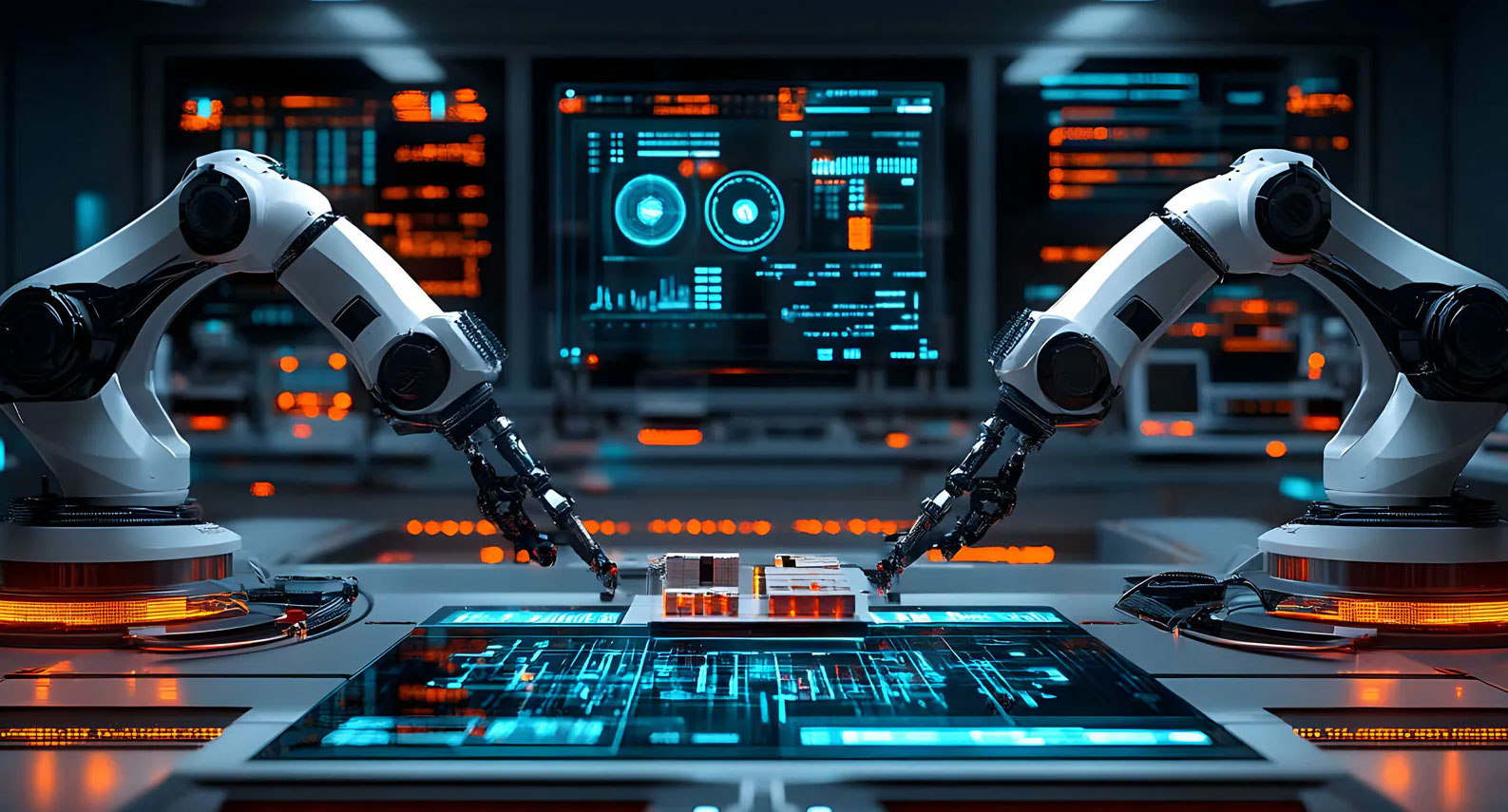
Manufacturers today face increasing pressure to deliver high-quality products while maintaining production speed and reducing operational costs. Even small product defects can lead to customer dissatisfaction, recalls, and major financial losses.
AI-powered quality inspection is helping manufacturers move toward smarter, faster, and more accurate quality control systems through intelligent automation and real-time defect detection.
AI-driven inspection systems are transforming traditional quality control into predictive, intelligent, and near zero-defect manufacturing operations.
Understanding AI-Powered Quality Inspection
AI-powered inspection systems use machine learning, computer vision, and advanced analytics to automatically detect manufacturing defects during production processes.
- High-speed visual inspection
- Real-time defect detection
- Automated quality analysis
- Continuous AI learning
- Predictive quality control
Unlike traditional inspection methods, AI systems continuously improve accuracy as they process more manufacturing data.
Limitations of Traditional Inspection Methods
Manual inspection processes often struggle to keep pace with modern high-speed manufacturing environments.
- Human fatigue causes inconsistent inspections
- Microscopic defects may be missed
- Inspection speeds limit productivity
- Quality standards vary between operators
As manufacturing volumes grow, traditional quality inspection systems become increasingly difficult to scale efficiently.
How AI Reduces Manufacturing Defects
Real-Time Defect Detection
AI systems instantly identify product defects during live production processes.
Machine Vision Analysis
Computer vision detects microscopic inconsistencies beyond human visual capabilities.
Continuous Learning
Machine learning models improve inspection accuracy by analyzing historical defect data.
Predictive Quality Control
AI predicts defect patterns before they affect large production batches.
Machine Vision and Precision Inspection
Machine vision technology allows AI systems to analyze product images with exceptional precision and consistency.
AI-powered cameras can identify:
- Surface scratches and cracks
- Color inconsistencies
- Dimensional defects
- Assembly errors
- Packaging issues
This significantly improves product quality while reducing false inspections.
Predictive Quality Analytics
AI systems not only detect defects but also predict them by analyzing historical production patterns and operational data.
Predictive analytics helps manufacturers:
- Identify recurring quality issues
- Prevent defect escalation
- Improve production stability
- Optimize machine settings
Benefits of AI Inspection Systems
AI-powered quality inspection delivers multiple operational benefits:
- Improved inspection accuracy
- Faster production cycles
- Reduced operational costs
- Higher product consistency
- Better regulatory compliance
Manufacturers can maintain higher production quality without slowing operational performance.
Industry 4.0 and Smart Manufacturing
AI inspection systems integrate with ERP platforms, IoT sensors, robotics, and manufacturing execution systems (MES).
This creates connected smart factories capable of autonomous quality monitoring and real-time operational optimization.
Real-World Industry Applications
- Automotive: Surface inspection for car panels and engine components
- Electronics: PCB defect detection and micro-crack analysis
- Pharmaceutical: Packaging verification and dosage inspection
- Food Processing: Contamination detection and packaging quality checks
- Textiles: Fabric defect and stitching analysis
Implementation Challenges
- Initial AI infrastructure investment
- Integration with legacy manufacturing systems
- Need for AI-skilled technical teams
- Large training datasets for machine learning
Despite these challenges, long-term operational efficiency and quality improvements provide significant ROI for manufacturers.
The Future of AI Quality Inspection
The future of manufacturing quality control will involve autonomous AI systems capable of real-time decision-making and self-correcting production environments.
Technologies such as edge AI, 5G connectivity, and neural network-based computer vision will continue driving the evolution of intelligent manufacturing quality systems.
Conclusion
AI-powered quality inspection is transforming manufacturing operations by enabling faster, more accurate, and predictive quality control systems.
Manufacturers adopting AI inspection platforms benefit from reduced defects, improved production consistency, lower operational costs, and stronger customer satisfaction.
Spider Asia helps manufacturers implement AI-driven quality inspection systems that support Industry 4.0 transformation and smart manufacturing innovation.